18 Things Your Face Can Tell You about Deep Health Problems
1. Balding - A sign of high DHT (testosterone)
• Pumpkin seeds
• Green tea
• Zinc
2. Losing outer eyebrows - A sign of hypothyroidism
• Iodine
3. Bloodshot eyes - A sign of liver issues and insulin resistance
• Avoid junk food
• Avoid alcohol
• Get on Healthy keto and IF
4. Dark circles beneath eyes - A sign of insulin resistance
• Keto and IF
5. Bags beneath eyes - A sign of blood sugar problems or kidney issues
• Keto and IF
6. Oily skin - A sign of high androgens (men) or PCOS (women)
• Zinc
• Keto and IF
7. Facial hair (women) - A sign of high androgens
• Keto and IF
8. Acne - A sign of high androgens
• Keto and IF
9. Cataracts - A sign of vitamin deficiency and high insulin
• Vitamin A
• Vitamin B1 (benfotiamine)
• NAC drops
• Lower carbs
10. Red cheeks - A sign of Cushing syndrome and high cortisol
• Natural antibiotics, including garlic, oregano, thyme, wormwood extract, and sage
• Natural probiotics, like sauerkraut
11. Grey or brown cheeks - A sign of melasma and high estrogen
• Avoid unnecessary hormone medications
• Avoid environmental plastics
• Avoid estrogenic chemicals
• Use DIM
• Consume cruciferous vegetables
• Take iodine (sea kelp)
12. Peeling, rough or dry skin, or Dermatitis - Signs of low omega-3s and high omega-6s
• Increase fatty fish
• Cod liver oil
• Avoid chicken, fried foods, nuts, and grains
• Avoid junk food
13. Dry eyes - A sign of low omega-3s
• Cod liver oil
14. Dry hair - A sign of low omega-3s
• Cod liver oil
15. Blackheads - A sign of low vitamin D
• Sun exposure
• Mushrooms
• Supplements
16. Cracked corners of mouth - A sign of low vitamin B2
• Avoid refined flour
• Take vitamin B2
17. Cold sores - A sign of HS1 virus infection and a weak immune system
• Garlic
• Zinc
• Fasting
• Avoid stress
18. Rounded face - A sign of high insulin
• Healthy Keto and IF
10 daily healthy habits for a better you 🦋 2022 glow up
Sharing 10 healthy habits & tips to change your life through small daily actions over time. Comment below: What would you like your daily guiding question to be?
8 ANTI-INFLAMMATORY DRINKS | to enjoy for health & wellness
These anti-inflammatory drinks are an easy, delicious, and natural way to fight inflammation. Not only are they packed with antioxidants and nutrients, but they come in an array of vibrant colors and flavors that will give your immune system the boost it needs.
From teas (including turmeric tea and elderberry tea) to smoothies (blueberry smoothie, turmeric smoothie, and carrot beet smoothie), juices (green juice), and tonics (jamu and ginger shot!), there's something for everyone. I promise you'll love these immune-boosting drinks, and not only do they taste great, but they make you feel great! Who doesn't love that?
Enjoy these drinks along with my previously recommended anti-inflammatory foods as part of a healthy diet. Create a foundation of health and wellness for your body!
“The results suggest that mild to moderate intake of ground, instant and decaffeinated coffee should be considered part of a healthy lifestyle,” said study author Peter Kistler, head of clinical electrophysiology research at the Baker Heart and Diabetes Institute and head of electrophysiology at Alfred Hospital in Melbourne.
Researchers found “significant reductions” in the risk for coronary heart disease, congestive heart failure and stroke for all three types of coffee. However, only ground and instant coffee with caffeine reduced the risk for an irregular heartbeat called arrhythmia. Decaffeinated coffee did not lower that risk, according to the study published Wednesday in the European Journal of Preventive Cardiology.
“This manuscript adds to the body of evidence from observational trials associating moderate coffee consumption with cardio protection, which looks promising,” said Charlotte Mills, a lecturer in nutritional sciences at the University of Reading in the UK, in a statement.
However, this study, like many in the past, was only observational in nature and therefore cannot prove a direct cause and effect, added Mills, who was not involved in the study.
“Does coffee make you healthy or do inherently healthier people consume coffee?” she asked. “Randomized controlled trials are needed to prove the relationship between coffee and cardiovascular health.”
Ground, caffeinated coffee lowered risk the most
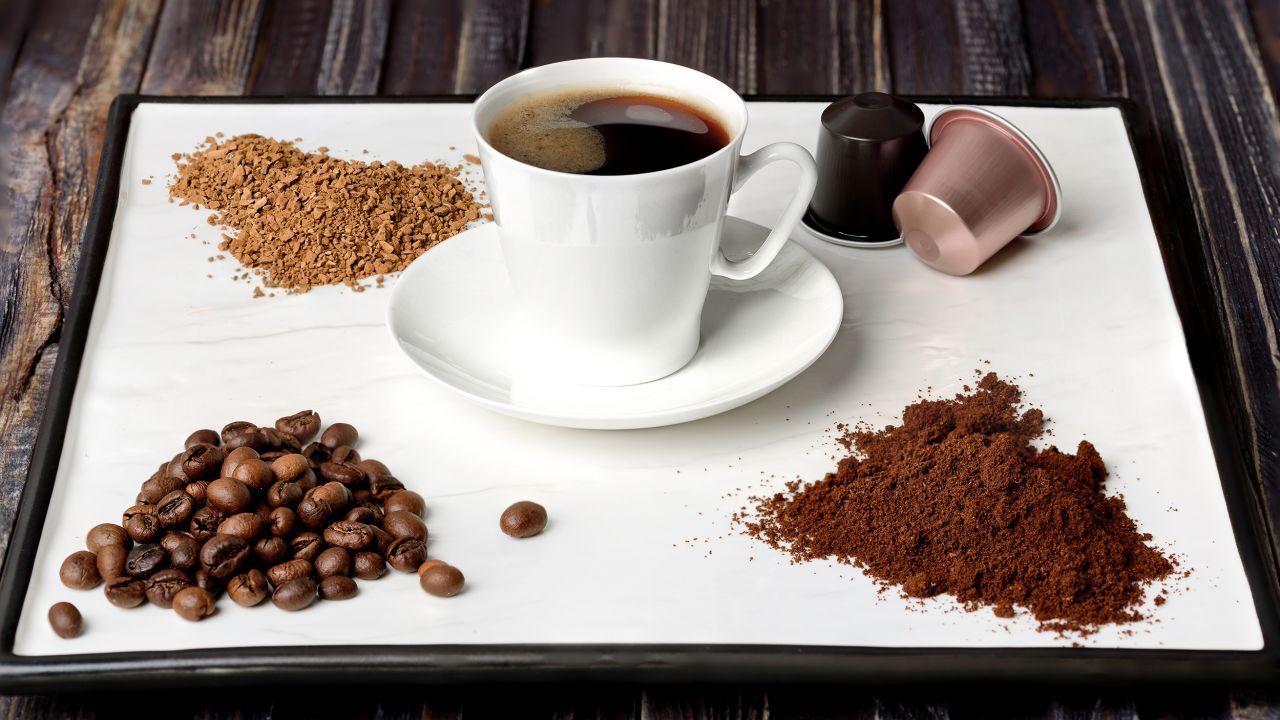
The study used data from the UK Biobank, a research database which contained coffee consumption preferences on nearly 450,000 adults who were free of arrhythmia or other cardiovascular disease at the start of the study. They were divided into four groups: those who enjoyed caffeinated ground coffee, those who chose decaffeinated coffee, those who preferred caffeinated instant coffee, and those who did not drink coffee at all.
After an average of 12.5 years, researchers looked at medical and death records for reports of arrhythmia, cardiovascular disease, stroke and death. After adjusting for age, diabetes, ethnicity, high blood pressure, obesity, obstructive sleep apnea, sex, smoking status, and tea and alcohol consumption, researchers found all types of coffee were linked with a reduction in death from any cause.
The fact that both caffeinated and decaffeinated coffee was beneficial “might suggest that it is not simply the caffeine which could potentially explain any associated reduction in risk,” said Duane Mellor, a registered dietitian and senior teaching fellow at Aston University Medical School in Birmingham in the UK, in a statement. He was not involved in the study.
“Caffeine is the most well-known constituent in coffee, but the beverage contains more than 100 biologically active components,” said Kistler, who holds joint appointments as professor of medicine at the University of Melbourne and Monash University.
“It is likely that the non-caffeinated compounds were responsible for the positive relationships observed between coffee drinking, cardiovascular disease and survival,” Kistler said.
Drinking two to three cups of coffee a day was linked to the largest reduction in early death, compared to people who drank no coffee, according to the statement. Ground coffee consumption lowered the risk of death by 27%, followed by 14% for decaffeinated, and 11% for instant caffeinated coffee.
The link between coffee and a lowered risk for heart disease and stroke was not as robust: Drinking two to three cups a day of ground coffee lowered risk by 20%, while the same amount of decaf coffee reduced risk by 6% and instant by 9%.
The data changed when it came to coffee’s impact on irregular heartbeat: Four to five cups a day of caffeinatedground coffee lowered risk by 17% while two to three cups a day of instant coffee reduced the likelihood of arrhythmia by 12%, the statement said.
More study needed
A limitation of the study was that coffee consumption was self-reported at a single point in time, said Annette Creedon, a nutritional scientist and manager at the British Nutrition Foundation, which is partially funded by food producers, retailers and food service companies.
“This study had a median follow-up period of 12.5 years during which many aspects of the participants diet and lifestyle may have changed,” said Creedon in a statement. She was not part of the research.
In addition, coffee can produce negative side effects in some people, she added. People with sleep issues or uncontrolled diabetes, for example, should check with a doctor before adding caffeine to their diets.
These negative side effects “can be particularly relevant to individuals who are sensitive to the effects of caffeine,” Creedon said. “Hence, the findings of this study do not indicate that people should start drinking coffee if they do not already drink it or that they should increase their consumption.”
Most studies are focused on the health benefits of black coffee, and do not take into account the extra sugars, creams, milks and processed additives that many people use in coffee.
“A simple cup of coffee perhaps with a little milk is very different to a large latte flavoured with a syrup and added cream,” Mellor said.
Adding sugars and dairy fats to coffee can reduce their health benefits, experts say.
In addition, how coffee is brewed can also affect its benefits for health. Filtered coffee catches a compound called cafestol that exists in the oily part of coffee. Cafestol can increase bad cholesterol or LDL (low-density lipoproteins).
However, using a French press, Turkish coffee maker or boiling coffee (as is often done in Scandinavian countries), does not remove cafestol.
And, finally, coffee’s benefits do not apply to children – even adolescents should not drink colas, coffees, energy drinks or other beverages with any amount of caffeine, according to the American Academy of Pediatrics.